Back to portfolio

Current case studies

Six systems. Real product evidence.

Each case separates the problem, shipped scope, architecture, reliability, tradeoffs, and verifiable proof—without placeholder claims or invented ROI.

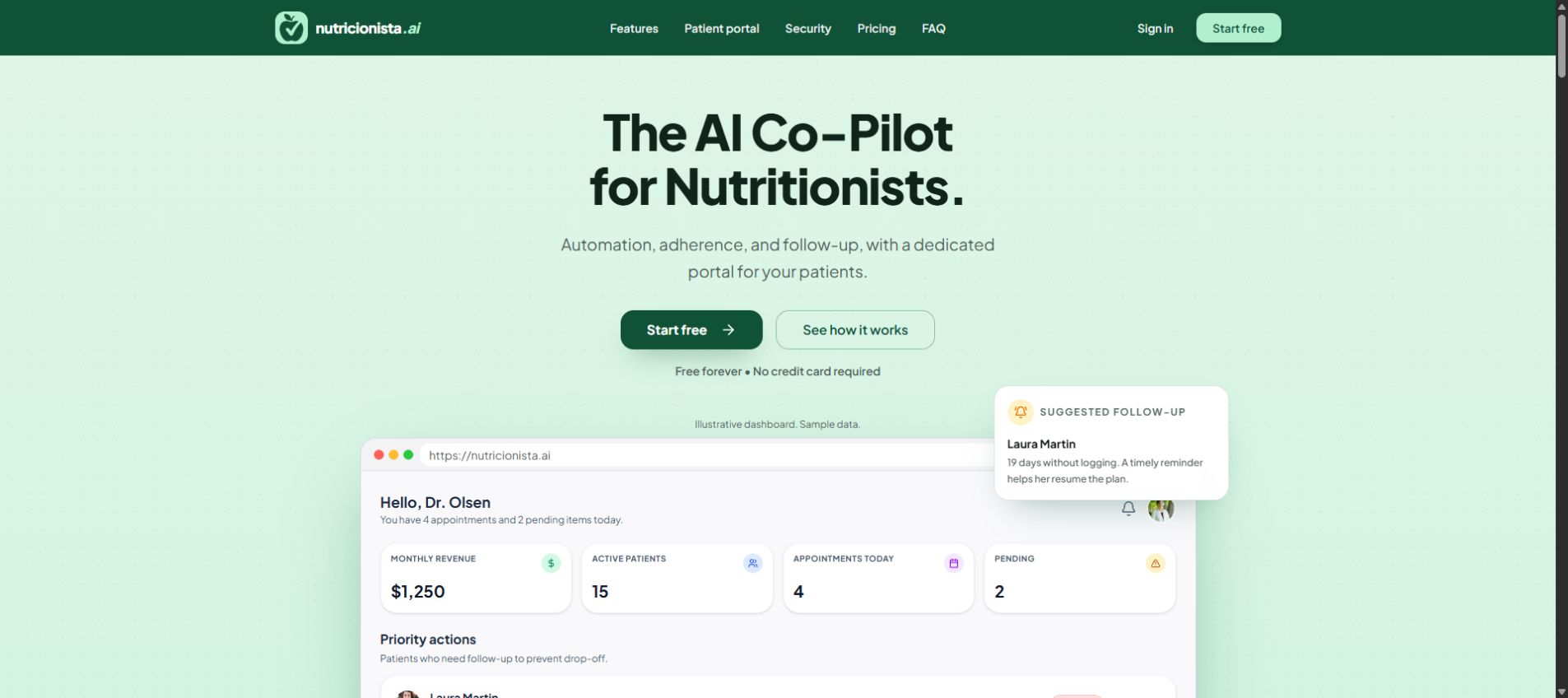
Nutricionista.ai English landing and professional dashboard
Live SaaS + mobile productOpen live surface

Nutricionista.ai: one operating system for an independent practice

A connected acquisition, professional, patient, and AI-assisted follow-up workflow.

Timeline: Founder-led product built and iterated through 2026.

Team: Founder, product architect, and full-stack implementer.

Stack: Next.js, TypeScript, Supabase, AI workflows, Vercel

Problem: Independent nutrition practices lose time when acquisition, patient context, scheduling, plans, messages, and follow-up live in disconnected tools.

What Kenneth built:

  • Designed the public landing, professional dashboard, patient workflow, scheduling, and follow-up surfaces as one product system.
  • Populated the professional dashboard with realistic operational states so priorities are visible at a glance.
  • Kept AI in an assistive role: preparing drafts and next actions while the professional remains in control.

Architecture: Public product surface -> authenticated professional workspace -> patient and scheduling workflows -> AI-assisted operational layer.

Reliability: The public surface is live and the case visuals use the current English landing and populated product dashboard.

Tradeoffs: Public captures use representative data; private health records, credentials, and production logs remain private.

Business impact: Replaces a fragmented practice workflow with one coherent product that can support acquisition, daily operations, and follow-up.

Proof: Live product, current landing capture, populated professional dashboard, and product case page.
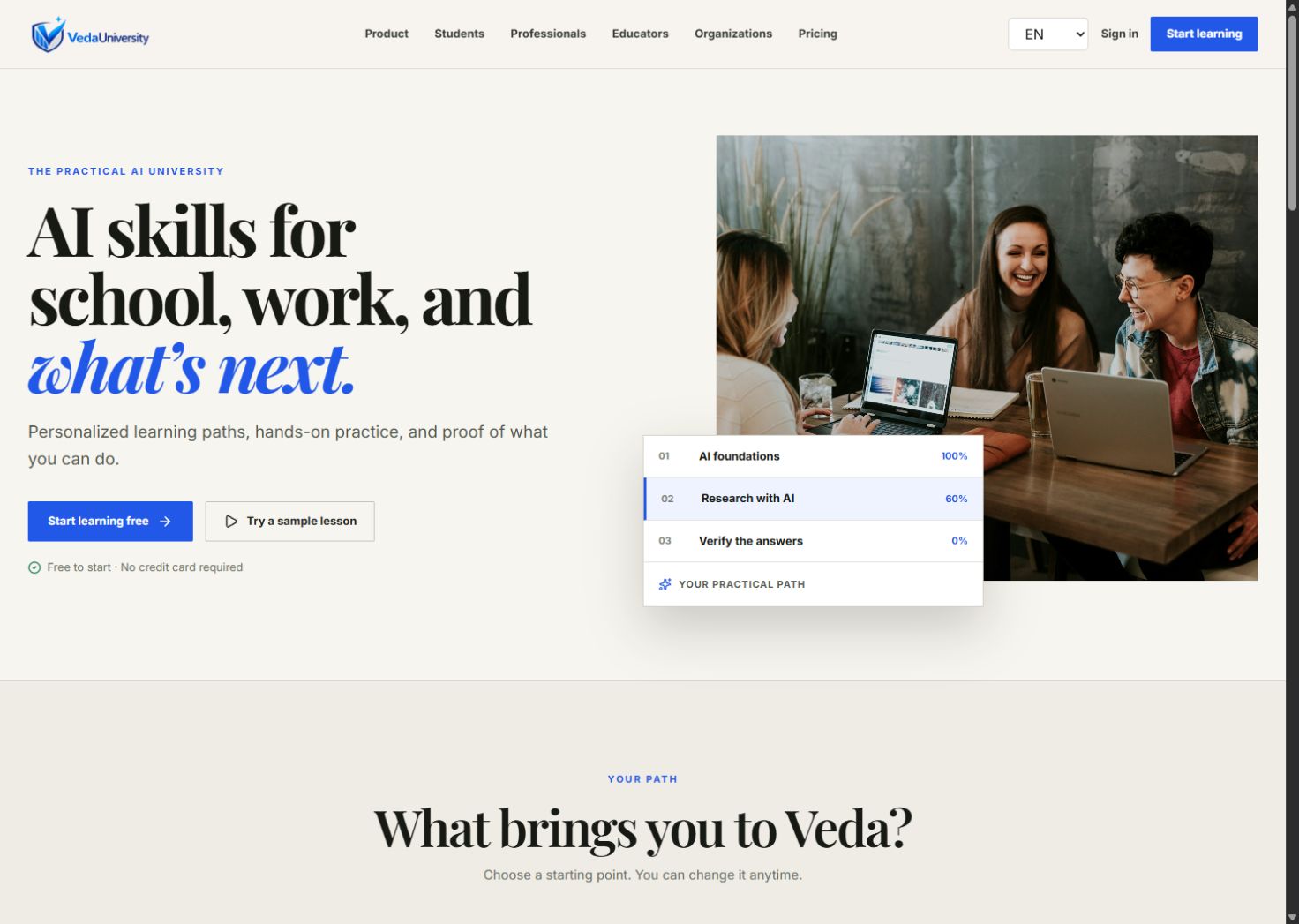
VedaUniversity English learning platform landing page
Live web productOpen live surface

VedaUniversity: from a public promise to an interactive lesson

A practical AI university organized around guided paths, hands-on work, and proof of skill.

Timeline: Product architecture and learning experience developed through 2026.

Team: Product architect and implementer.

Stack: Web product, learning paths, internationalization, responsive product UI

Problem: AI education is often too abstract or too tool-specific, leaving learners without a clear sequence from curiosity to demonstrable work.

What Kenneth built:

  • Structured the product around audience intent, practical paths, sample lessons, and visible progress.
  • Connected the marketing promise to a readable, responsive learning experience instead of a disconnected course catalog.
  • Implemented internationalized public and lesson surfaces for a broader audience.

Architecture: English public landing -> practical learning paths -> sample lesson -> structured claim, evidence, and judgment workflow.

Reliability: The production product is live and the mobile evidence was captured from the real lesson experience.

Tradeoffs: The public case focuses on product experience and shipped scope; learner records and private platform data are not exposed.

Business impact: Creates a coherent route from discovery to practical AI learning with an experience that can be evaluated before enrollment.

Proof: Live public product, current English landing, real mobile lesson capture, and product case page.

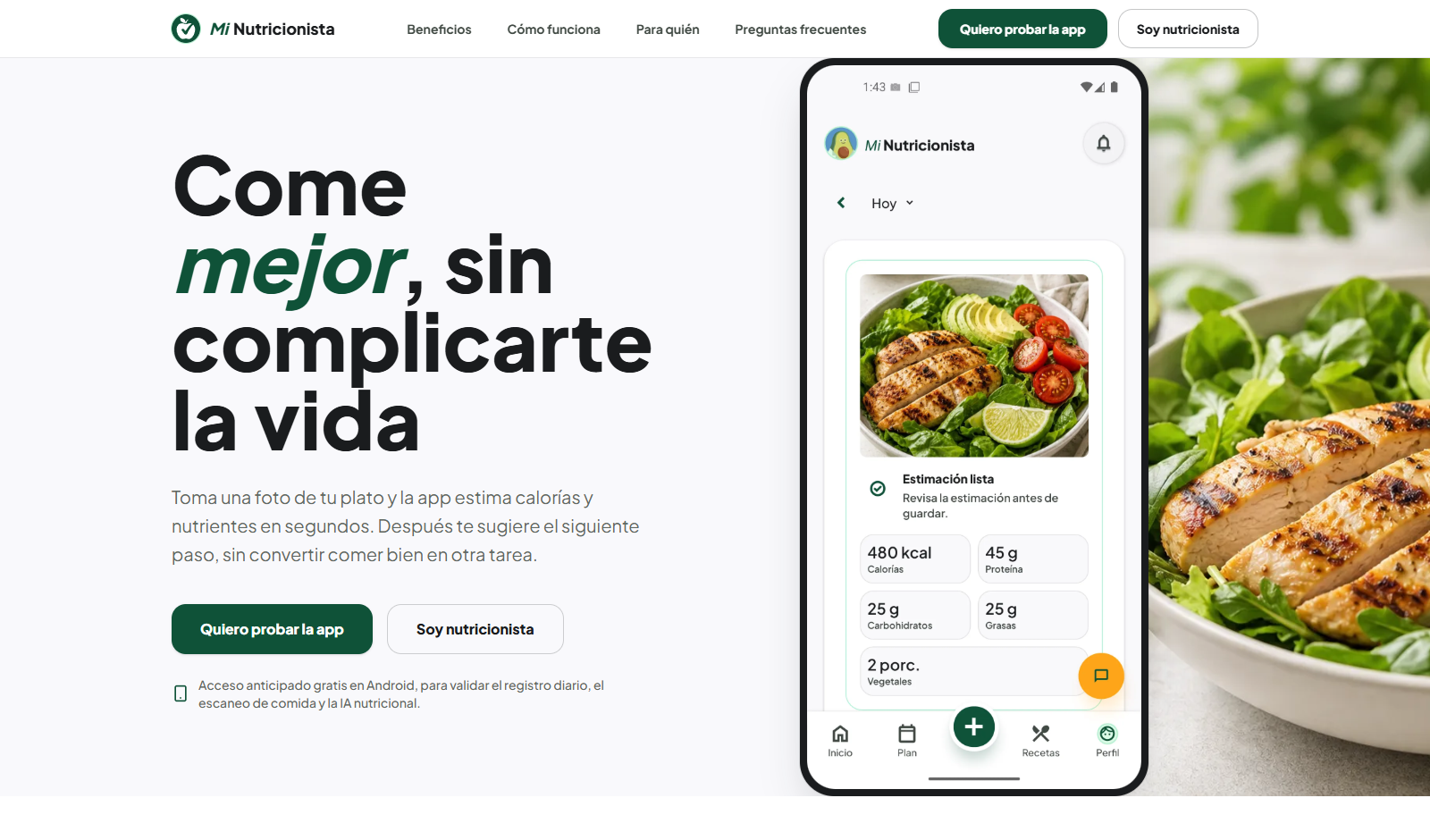
Mi Nutricionista real Spanish landing with the mobile product
Mobile beta + live webOpen live surface

Mi Nutricionista: nutrition guidance with less logging friction

A consumer health experience built around photos, conversational guidance, and a visible next step.

Timeline: Mobile and web product work developed through 2026.

Team: Product strategy, mobile experience, AI routing, and implementation.

Stack: React Native, Expo, TypeScript, on-device AI, Supabase

Problem: Food logging becomes another chore when users must translate real life into rigid forms and disconnected numbers.

What Kenneth built:

  • Designed a photo-first flow for meal estimates, review, and follow-up guidance.
  • Connected everyday tracking with professional support instead of presenting calories as an isolated number.
  • Implemented local and cloud AI routing foundations with reviewable estimates and clear user control.

Architecture: Mobile capture -> reviewable nutrition estimate -> diary and progress -> professional support workflow.

Reliability: The Spanish case image is a direct capture of the current public landing and its embedded mobile product experience.

Tradeoffs: Nutrition estimates remain assistive and reviewable; private health data and production accounts are not shown publicly.

Business impact: Reduces the distance between a real meal, useful context, and the next action in a calmer consumer workflow.

Proof: Live Spanish landing, real product capture, and product case page.

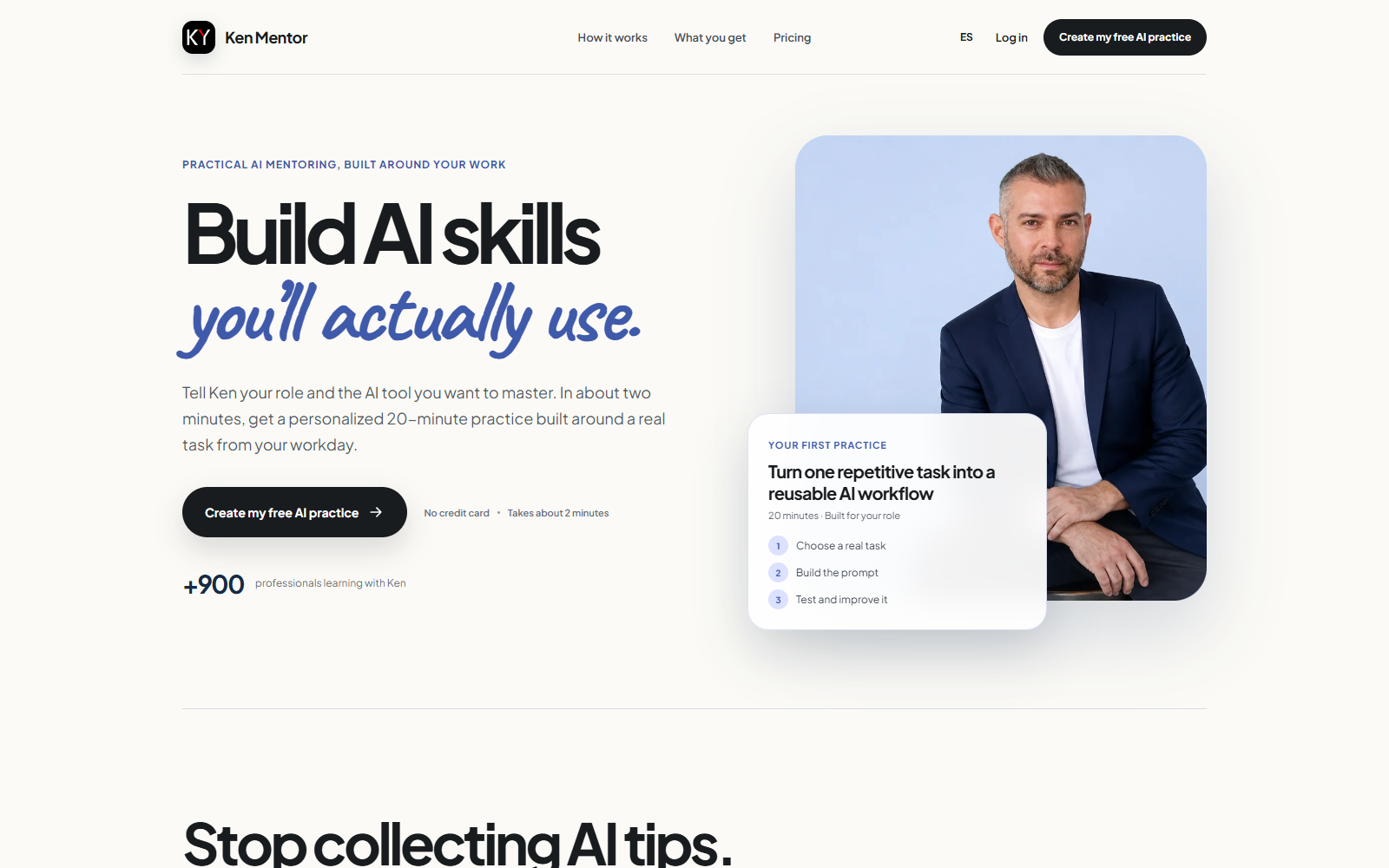
Ken Mentor current English landing page
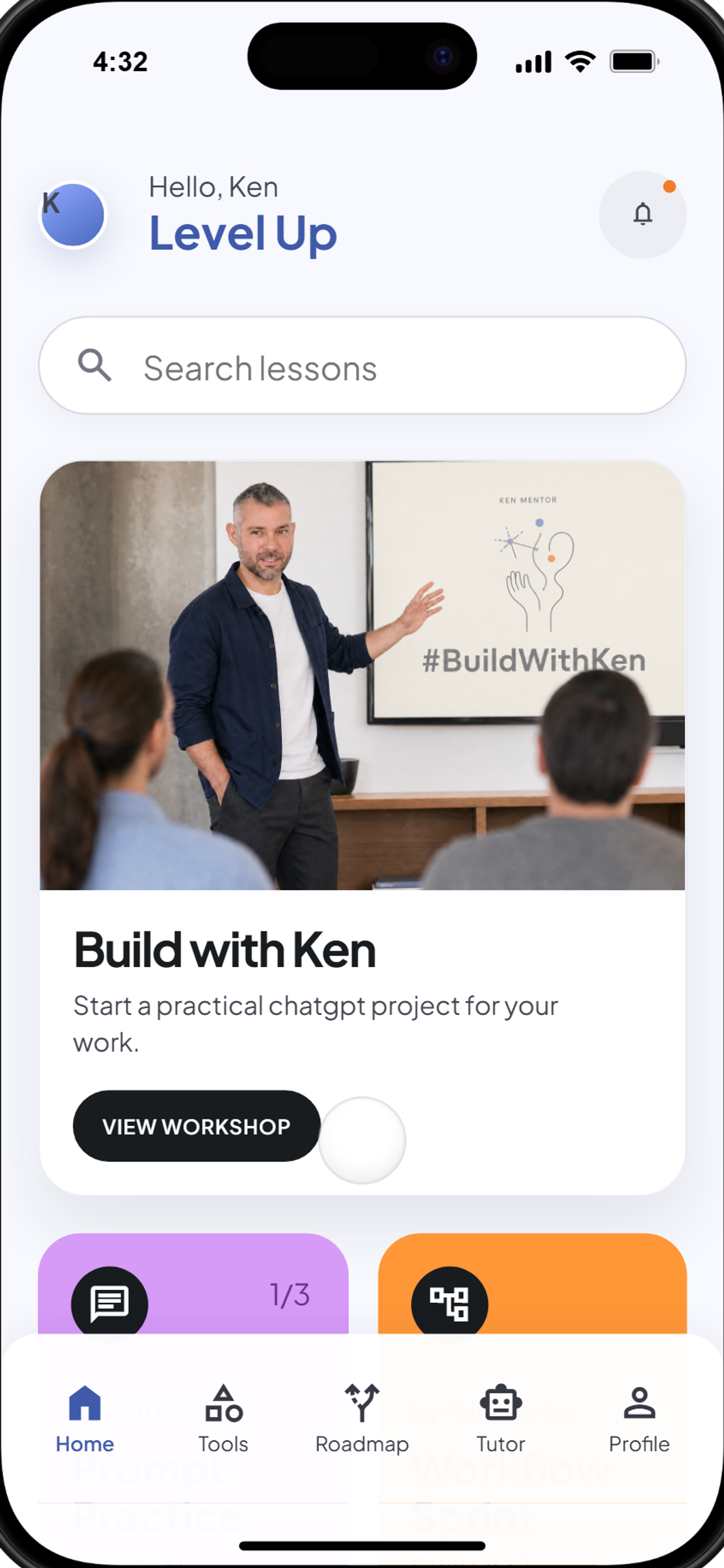
Ken Mentor mobile app home in English
Android closed testOpen product case

Ken Mentor: a weekly path instead of another tool list

A personal AI coach that turns a career goal into skills, tools, and a weekly roadmap.

Timeline: Product recreation, Android delivery, and QA completed in 2026.

Team: Product, interaction, Android delivery, and QA lead.

Stack: React, Capacitor, Android, AI tutor, product QA

Problem: People collect AI tools and courses without a clear sequence or a feedback loop tied to the work they want to do.

What Kenneth built:

  • Connected onboarding, a focused home, weekly roadmap, tool catalog, and mentor conversation around one learner goal.
  • Rebuilt the mobile interface for Android delivery with consistent English product copy and a deliberate dark visual system.
  • Validated the complete flow and captured high-resolution screens from the actual product build.

Architecture: Goal onboarding -> weekly roadmap -> focused lessons and tools -> mentor feedback loop.

Reliability: The mobile repository contains the complete QA flow and the current English product screens used in the portfolio.

Tradeoffs: The product is in closed test, so the portfolio shows verified screens and scope instead of a public app-store link.

Business impact: Turns a broad intent to learn AI into a visible weekly sequence with a persistent coaching context.

Proof: Closed-test build, verified screen set, and product case page.

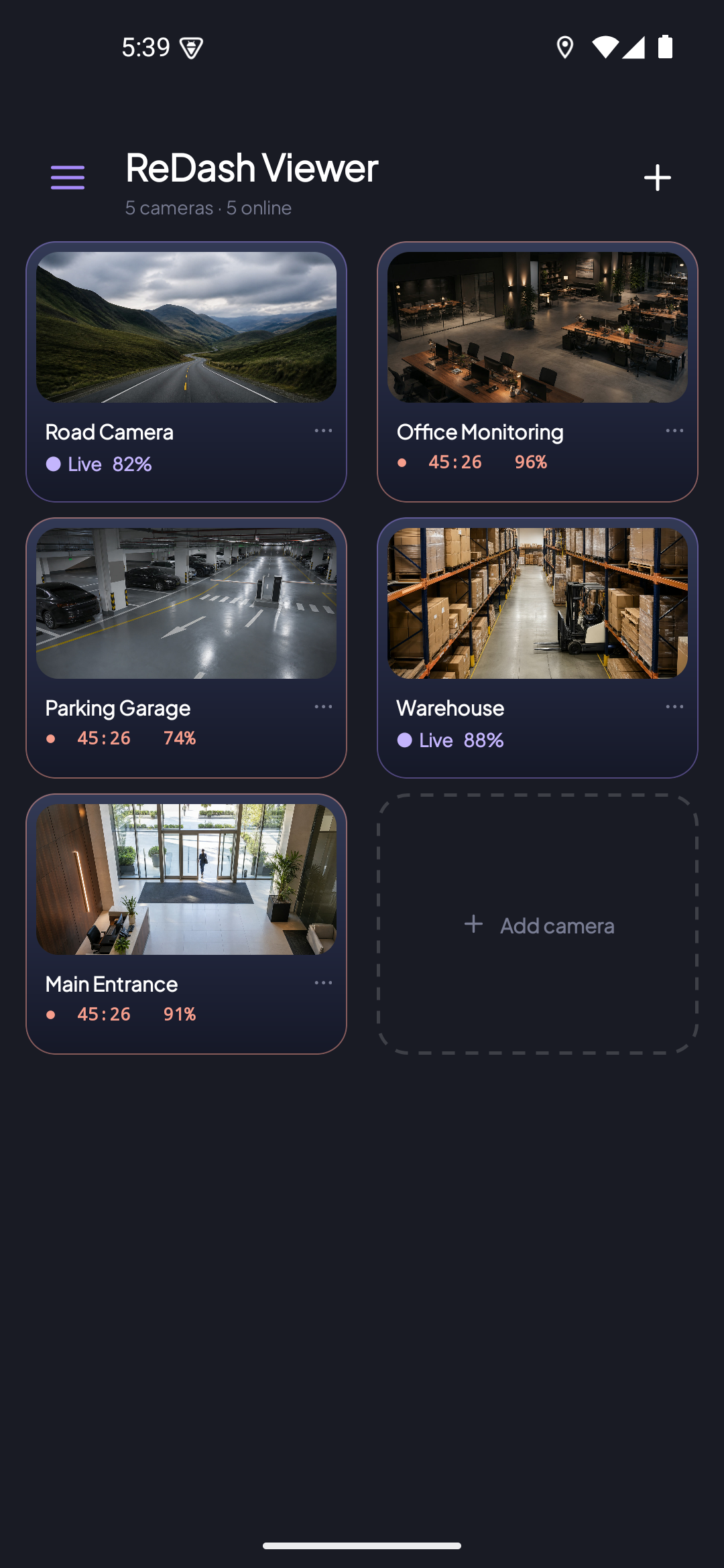
ReDash v0.8.17 Viewer fleet with five live camera previews
Android build v0.8.17-gafasOpen product case

ReDash: a private dashcam from a spare Android phone

A local-first Sender and Viewer system with clear camera states and private remote access.

Timeline: Current APK verified on the dedicated Android emulator in 2026.

Team: Product architect, Android system builder, privacy model, and delivery.

Stack: Kotlin, CameraX, Express, Tailscale, local-first storage

Problem: Dashcams are usually closed hardware products with opaque storage, limited remote access, and another device to buy.

What Kenneth built:

  • Designed Sender and Viewer as two roles in the same Android application.
  • Built explicit ready, recording, pairing, and fleet-monitoring states across five distinct camera feeds.
  • Kept recordings local and used authenticated private networking for remote access.

Architecture: Android Sender camera -> local-first recording -> authenticated private connection -> Android Viewer control surface.

Reliability: The current APK was verified on the emulator; all five Viewer cameras report independently and open distinct road, office, parking, warehouse, and entrance feeds.

Tradeoffs: The system prioritizes private networking and local storage over public cloud access and account-heavy setup.

Business impact: Extends the useful life of existing Android hardware while preserving control over recording and access.

Proof: Verified APK, current Sender and Viewer captures, and product case page.

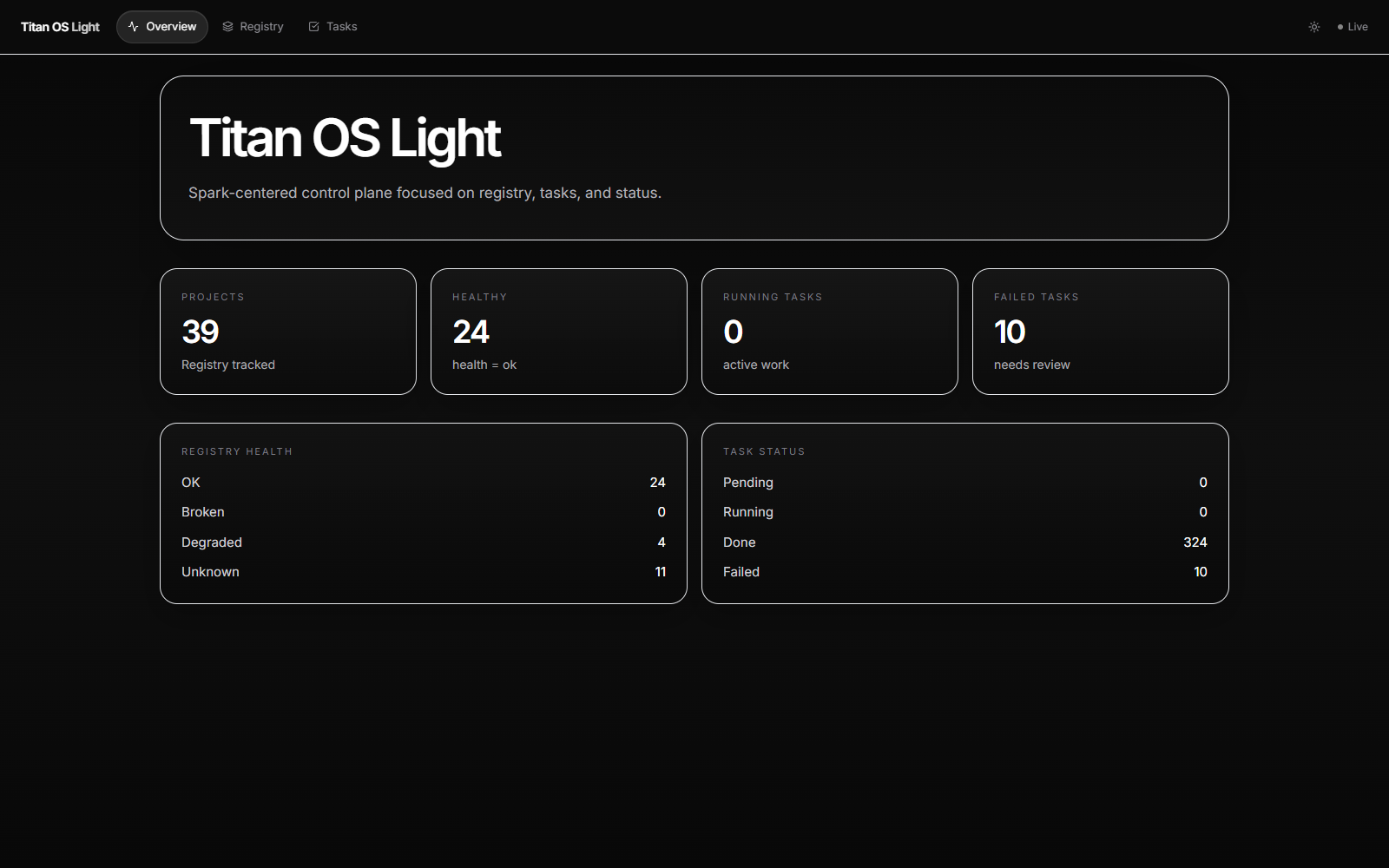
Titan OS Light operational overview
Private productionOpen product case

Titan OS Light: operational clarity for a multi-machine agent system

A restrained control plane for project registry, task state, and operational health.

Timeline: Built as the live control plane for current project and task operations.

Team: System architect, operations UI, registry design, and deployment.

Stack: React, Vite, Express, SQLite, SSE, Tailscale

Problem: Projects, tasks, ownership, deploy commands, and health become difficult to reason about when agents operate across several machines.

What Kenneth built:

  • Reduced the control plane to overview, registry, and task surfaces backed by durable state and live updates.
  • Made ownership, runtime location, service health, repository paths, and deploy commands visible in one place.
  • Added a real mobile task operations view for checking completed and failed work without a desktop layout squeezed into a phone.

Architecture: React control plane -> Express API -> SQLite state -> live updates -> private Tailscale runtime.

Reliability: The captures came from the live private runtime after the production health endpoint returned HTTP 200.

Tradeoffs: The public case shows operational proof without exposing private host access, credentials, logs, or internal infrastructure details.

Business impact: Tracks 39 projects with 324 completed tasks in the current runtime and gives the operator one reliable place to inspect work state.

Proof: Live private runtime, health check, real overview and mobile task captures, and product case page.